When children play, it can look simple, even random.Blocks scattered on the floor.
Pretend conversations with imaginary friends.
Endless “why” questions and make-believe games.But behind all that play, something powerful is happening.Your child isn’t just passing time.
They’re building their brain.
And this isn’t just a parenting belief, it’s backed by decades of research from experts like Jean Piaget, Lev Vygotsky and others like Bowlby and Bandura.
Jean Piaget, one of the most influential child development psychologists, believed that children learn best by actively engaging with their environment.
In simple terms:
Children don’t learn by being told, they learn by doing.
When a child stacks blocks, they’re not just playing. They’re understanding balance and cause-and-effect.
When they pretend to be a teacher or a doctor, they’re exploring how the world works.
Play helps children connect ideas, test outcomes, and build understanding in a way that passive learning never could.
It means play is not a distraction from learning.
It is learning.
But in today’s world, play is changing. Screens are part of children’s lives, and not all screen time supports development.
The goal isn’t to remove technology, it’s to use it better.
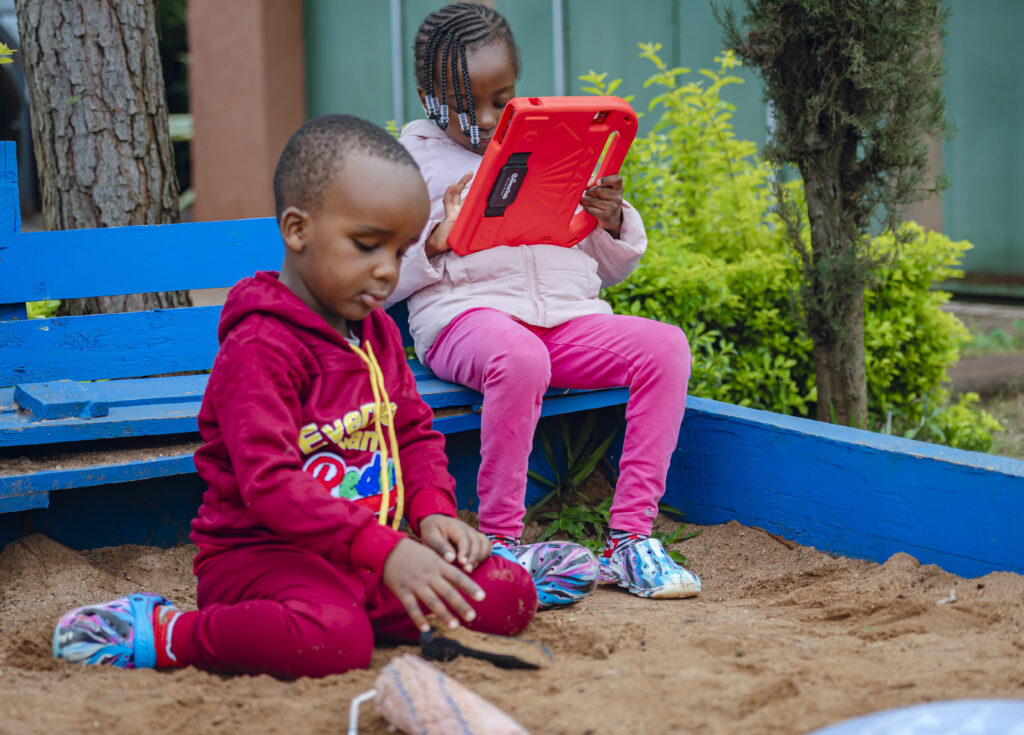
ElimuTab is built around the idea that children learn best through play. That’s why it comes with a wide range of fun, interactive games, not just to entertain, but to develop key skills.
As children play, they are:
It feels like play, because it is.
But it’s also learning, guided in the right direction.
For parents, this means less worry about “screen time” and more confidence in what that time is being used for.
Because when play is designed with purpose, every moment becomes an opportunity for growth.
Thank you for choosing ElimuTab as your educational tablet ,projectors, interactive whiteboard, laptops and edtech content provider in Kenya. If you have any additional questions or concerns, please do not hesitate to contact us.
Added to cart
Check out our shop to see what's available
Need help?Just message us!