
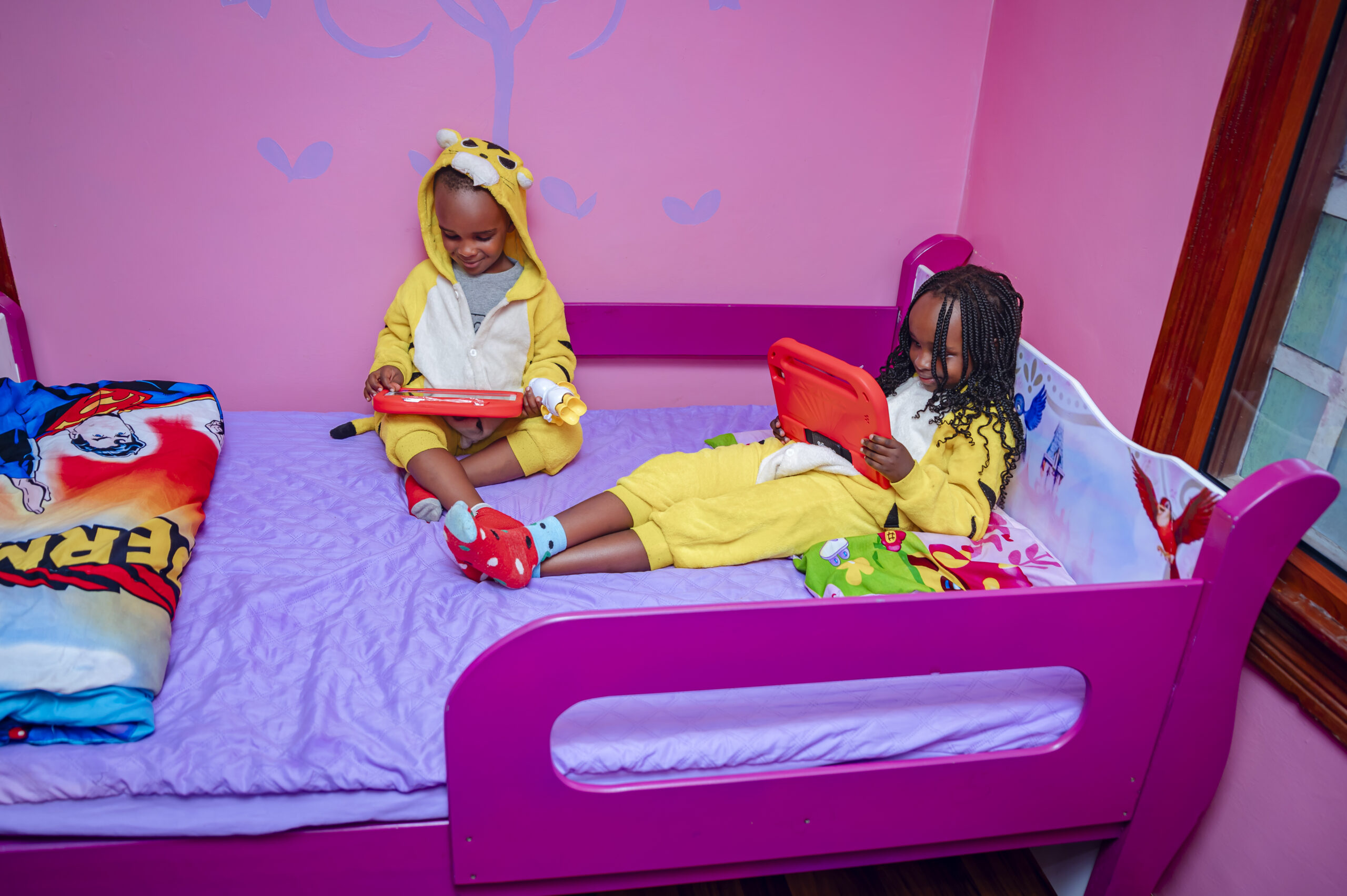
As parents, we’re living in a new reality.
Screens are everywhere.
Our children see them at home, in school, in shops, and even in our own hands. So it’s only natural to wonder: Is all this screen time helping my child… or hurting them?
It’s a question many parents wrestle with.
And the answer may be simpler than we think.
The issue isn’t necessarily the amount of screen time.
It’s what your child is doing during that time.
Let’s be honest. We’ve all handed a child a phone or tablet just to keep them occupied for a few minutes.
Sometimes that’s exactly what we need.
But there is a big difference between content that merely entertains and content that actively engages a child’s mind.
One keeps them busy.
The other helps them grow.
When children interact with educational games, puzzles, stories, and guided activities, they are doing much more than staring at a screen. They are thinking, experimenting, solving problems, and building skills.
In other words, they are learning.
Think about how naturally children learn through play.
They build towers, ask endless questions, sort objects, and invent imaginary worlds.
To an adult, it may look like simple fun.
But beneath the surface, their brains are working hard.
They are developing memory, language, creativity, and reasoning skills.
That same principle applies to well-designed digital learning experiences.
When learning feels playful, children become more engaged. They stay focused longer and absorb concepts more easily because the experience feels enjoyable rather than forced.
Technology is not going away.
Our goal as parents and teachers is not to eliminate it, but to guide children toward healthier and more meaningful ways of using it.
That means helping them use devices to:
When screen time is intentional, devices become tools for discovery rather than distractions.
At ElimuTab, we believe that children should be able to enjoy technology while benefiting from it.
That’s why every ElimuTab comes preloaded with fun, interactive games and educational content carefully designed to support learning.
As children play, they are also:
To children, it feels like play.
To parents, it feels reassuring.
And to teachers, it becomes a valuable extension of what happens in the classroom.
Children are curious by nature.
They want to touch, explore, test, and discover.
The best educational tools work with that curiosity instead of against it.
When technology is designed around play-based learning, it taps into the same developmental principles described by experts like Piaget and Vygotsky: children learn most effectively when they are actively engaged and having meaningful interactions.
That’s exactly what purposeful educational technology aims to do.
The conversation about screen time needs to change.
Instead of asking, “How much time is my child spending on a device?” a better question may be, “What is my child learning while they use it?”
Because when screens are used thoughtfully, they can do much more than entertain.
They can spark curiosity.
They can strengthen important skills.
And they can help children grow into confident, capable learners.
That is screen time worth embracing.
Thank you for choosing ElimuTab as your educational tablet ,projectors, interactive whiteboard, laptops and edtech content provider in Kenya. If you have any additional questions or concerns, please do not hesitate to contact us.
Added to cart
Check out our shop to see what's available
Need help?Just message us!