
The future of education is not a contest between teachers and technology.
It is not a question of whether screens will replace teachers, whether AI will replace instruction, or whether devices will replace the classroom. The more important question is how schools can use technology to strengthen teaching, improve learner engagement, and prepare students for a digital world.
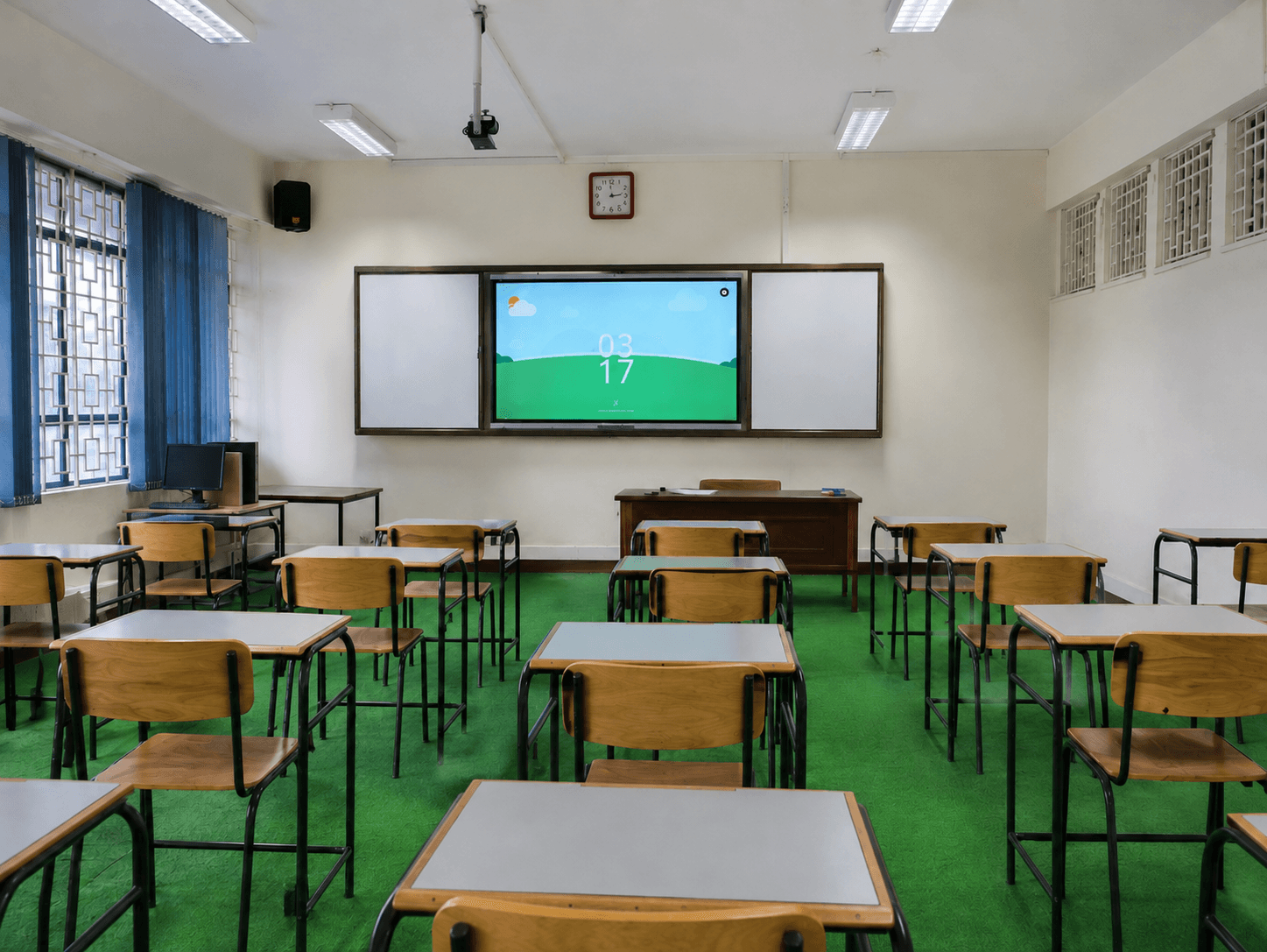
For school leaders, this distinction matters. With an ElimuTab Interactive Screen, a teacher can turn the front of the classroom into a more visual, participatory, and flexible learning space.
Technology should not be introduced into classrooms as a symbol of modernity alone. It should solve real instructional problems. It should help teachers explain better, help learners participate more actively, and help schools deliver a richer learning experience.
UNESCO’s 2023 Global Education Monitoring Report advises that education technology should be judged by whether it supports learning outcomes, teacher preparation, relevant content, governance, equity, safety, and inclusion. It also cautions that technology should support quality education rather than replace teacher-led instruction.
This is the right way to think about the future classroom.
The best model is not teacher versus technology.
It is the teacher with better tools.
Teachers Remain the Centre of Learning
A teacher does more than present information.
A teacher explains, questions, demonstrates, corrects, encourages, observes confusion, adjusts pace, manages the classroom, and connects learning to the real world. These human responsibilities cannot be replaced by hardware, software, or artificial intelligence.
This is especially important in African education systems, where teacher workload remains a major concern. UNESCO has reported that sub-Saharan Africa will need millions more teachers by 2030 to meet education goals, making teacher support a critical priority for the region.
Technology should therefore be designed to reduce pressure on teachers, not increase it.
A good EdTech investment should help teachers prepare, present, demonstrate, assess, and engage learners more effectively. It should make the classroom more interactive without making teaching more complicated.
The Interactive Screen as a Teaching Tool
An interactive screen should not be seen as a luxury display.
Used well, it becomes a central teaching tool.
With an ElimuTab Interactive Screen, a teacher can turn the front of the classroom into a more visual, participatory, and flexible learning space. Lessons can move beyond static notes on a board into diagrams, videos, annotations, presentations, digital exercises, learner demonstrations, and real-time explanations.
This matters because many learners understand better when they can see, hear, interact, and participate.
A science teacher can demonstrate a process visually.
A mathematics teacher can solve problems step by step.
A language teacher can display reading passages and annotate key ideas.
A geography teacher can use maps and visuals.
A school leader can use the same screen for training, meetings, presentations, and staff development.
The value is not the screen itself.
The value is what the screen allows the teacher to do better.
Tablets Extend Learning Beyond the Board
While the interactive screen supports teacher-led instruction, tablets support learner participation and individual practice.
This is where a complete classroom model becomes powerful.
The teacher can introduce, explain, and demonstrate using the interactive screen. Learners can then practise, read, revise, take quizzes, explore digital books, complete activities, or build digital skills using tablets.
This creates a stronger connection between instruction and practice.
The screen supports the shared classroom experience.
The tablets support individual learning and guided exploration.
For schools, this is important because classroom technology should not stop at presentation. It should support the full learning cycle: teaching, participation, practice, revision, assessment, and feedback.
Technology Must Fit the Curriculum
One of the most common mistakes schools make is buying technology before defining the learning purpose.
A device or screen only becomes valuable when it supports what the school is trying to teach.
That is why curriculum relevance matters.
ElimuTab’s approach is built around practical classroom use, educational content, digital books, revision support, coding, creativity, and age-appropriate learning. The goal is not to introduce screens for the sake of screens, but to support meaningful learning across subjects and skill areas.
For schools, this matters because technology must fit into teaching plans, learner levels, curriculum expectations, and school goals.
If it does not support the curriculum, it risks becoming decoration.
The ElimuTab Classroom Model
At ElimuTab, we believe the future classroom should be human-led and tech-supported.
This means the teacher remains at the centre, while technology strengthens the learning experience.
ElimuTab Interactive Screens support teachers with visual, interactive, and engaging lesson delivery. ElimuTab tablets support learners with guided practice, educational content, digital books, revision, coding, creativity, and safer digital access.
Together, they help schools move from simple device adoption to a more complete digital learning environment.
Not a classroom where technology replaces the teacher.
A classroom where the teacher has better tools.
The Future Still Needs Teachers
Schools do not need technology that competes with teachers.
They need technology that helps teachers teach better and learners learn more actively.
The future classroom will still need explanation, discipline, care, judgment, curiosity, encouragement, and human connection.
Technology can support all of this.
But it cannot replace it.
That is why the strongest classroom model is not built around screens alone.
It is built around capable teachers, engaged learners, relevant content, safe access, and tools that make learning clearer, richer, and more interactive.
The future classroom still needs teachers.
It simply gives them better tools.