
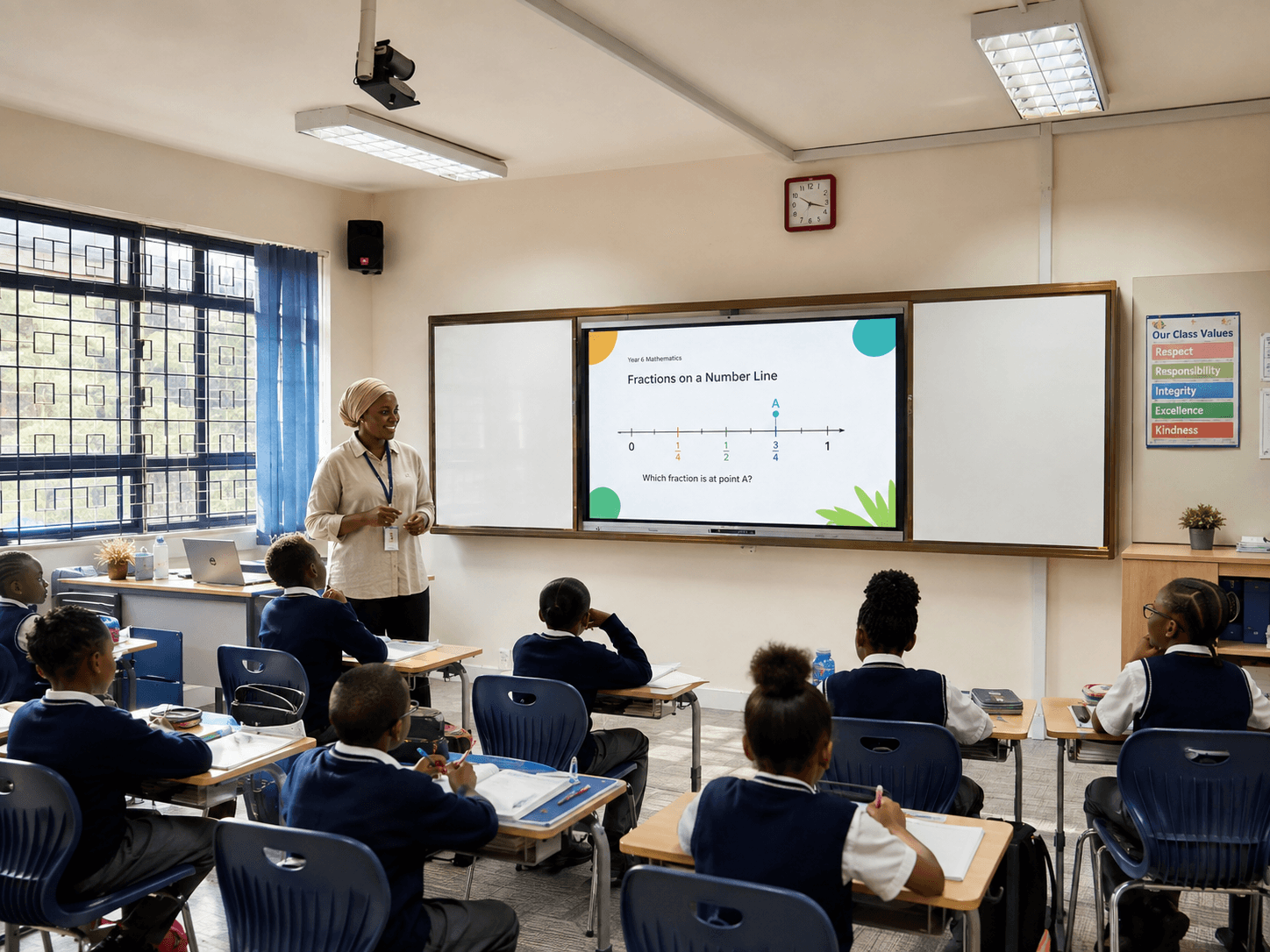
Elimutab is one of Africa’s leading EdTech brands. The continent’s future will not be defined by the most advanced technology alone. It will be defined by whether that technology works in real classrooms.
That distinction matters.
Across the continent, schools are being introduced to tablets, smart screens, learning platforms, AI tools, digital content libraries, virtual labs, coding programmes, and school management systems. The opportunity is significant. Technology can improve access, support teachers, strengthen digital skills, and expose learners to new ways of learning.
But technology only creates value when it fits the environment in which it is used.
For African schools, that environment is often complex. Internet access may be uneven. Class sizes may be large. Teacher workload is already high. Budgets are under pressure. Curriculum expectations are specific. Parents want visible value. School leaders need solutions that can survive beyond launch day.
This is why Africa’s EdTech conversation must move beyond adoption.
The question is not simply: Are schools using technology?
The better question is: Is the technology working inside the realities of African classrooms?
Connectivity Is Improving, But It Is Not Guaranteed
Connectivity remains one of the biggest design considerations for EdTech in Africa.
GSMA’s Mobile Economy Africa 2025 report states that 416 million people are now using mobile internet in Africa. However, almost 75% of the population remains unconnected, and 960 million people are not using mobile internet despite living in areas with coverage. The report identifies barriers such as affordability, device access, and digital skills.
This matters for education.
If a digital learning solution assumes constant, affordable, high-quality internet, it will exclude many learners and frustrate many schools. Online platforms are useful, but they cannot be the only path to learning.
African EdTech must therefore be designed with flexibility.
Schools need solutions that can support online learning where connectivity exists, but still offer meaningful offline or low-data functionality where it does not.
Learning should be enhanced by the internet.
It should not collapse without it.
Teacher Capacity Must Be Central
The success of EdTech depends heavily on teachers.
A digital tool may look impressive in a demonstration, but if teachers are not trained, supported, and confident using it, the solution will remain underused.
This is especially important in Africa, where teacher shortages and workload pressures remain serious. UNESCO reports that sub-Saharan Africa will need 15 million more teachers by 2030, representing about one-third of the global teacher demand required to achieve universal primary and secondary education.
This reality should shape how EdTech is built.
Technology should reduce friction for teachers, not add another burden. It should support lesson delivery, content access, assessment, revision, learner engagement, and classroom management.
The future is not teacher versus technology.
The future is teacher-led, technology-supported learning.
Curriculum Relevance Cannot Be Optional
Africa does not need generic EdTech that ignores local curriculum realities.
A platform may be well-designed and still fail if it does not match what teachers are expected to teach, what learners are expected to master, and what schools are accountable for delivering.
For EdTech to succeed in African classrooms, content must be relevant to the learning pathway.
It must support curriculum objectives.
It must fit learner age groups.
It must help teachers deliver lessons more effectively.
It must support revision, assessment, practice, and skill development.
It must reflect local learning needs while still preparing learners for a global future.
Imported content can be useful, but it cannot be the entire strategy.
Africa needs digital learning tools that understand local education systems, languages, classroom conditions, assessment structures, and parent expectations.
Without curriculum relevance, EdTech becomes decoration.
Affordability Must Mean Sustainable Value
Cost is one of the most important realities in African education.
Schools are not only buying devices or software. They are investing in setup, training, maintenance, repairs, content updates, connectivity, accessories, licences, and ongoing support.
A low-cost solution may become expensive if it fails quickly, lacks support, depends heavily on internet, or requires repeated replacement.
This is why affordability should not mean “cheap.”
It should mean sustainable value.
A good EdTech solution should be durable, usable, scalable, supported, and clear in its total cost of ownership.
School leaders should be able to answer:
What does it cost to start?
What does it cost to maintain?
What support is included?
What happens when something fails?
How long will the solution remain useful?
How will it improve learning or operations?
If those answers are unclear, the investment is risky.
Safety and Governance Must Be Built In
Digital learning also introduces responsibility.
When schools give learners access to technology, they must also consider online safety, age-appropriate content, data protection, browsing controls, usage policies, and digital behaviour.
UNESCO’s 2023 Global Education Monitoring Report cautions that technology in education should be assessed not only by access, but also by equity, inclusion, governance, safety, teacher capacity, and learning outcomes. The report also notes that globally, only 40% of primary schools, 50% of lower secondary schools, and 65% of upper secondary schools are connected to the internet.
This is an important reminder.
Digital transformation in schools is not only a hardware project.
It is a governance project.
Schools need clear policies on device use, content access, screen time, learner data, AI use, teacher responsibilities, and parent communication.
Without governance, technology can create new risks even as it solves old problems.
Implementation Matters More Than Installation
One of the biggest mistakes in EdTech is confusing installation with implementation.
Installing a smart screen is not the same as improving teaching.
Distributing tablets is not the same as improving learning.
Buying a platform is not the same as changing outcomes.
Implementation requires training, monitoring, support, usage routines, leadership buy-in, teacher confidence, and clear success measures.
Kenya’s Last Mile Connectivity of Schools project shows how infrastructure and implementation must move together. UNICEF Kenya reported that, as of December 2025, 363 public primary schools had been connected under the project, benefiting more than 277,000 learners with access to digital content, virtual laboratories, and online learning platforms. The wider project aims to connect 1,000 public primary schools across 14 counties.
That kind of initiative points in the right direction because connectivity is being tied to learning access, teacher use, and curriculum-aligned digital education.
Africa needs more EdTech models that think this way.
Not technology as an event.
Technology as a system.
The Standard Should Be Outcomes
The future of EdTech in Africa should not be measured by how modern a classroom looks.
It should be measured by what improves.
Are learners reading better?
Are teachers better supported?
Are lessons more engaging?
Is revision more consistent?
Are learners building digital skills?
Is access becoming more inclusive?
Are schools reducing learning gaps?
Are parents seeing value?
Is the technology still being used months after deployment?
These are the questions that matter.
Africa does not need EdTech built for perfect conditions. It needs EdTech built for real classrooms.
That means solutions designed for uneven connectivity, large classes, teacher workload, affordability, curriculum relevance, learner safety, and long-term support.
At ElimuTab, this is the standard we believe African EdTech must meet.
The goal is not to add more screens to education.
The goal is to make learning more accessible, safer, more relevant, and more effective.
Africa’s EdTech future will not be built by technology that only works in ideal conditions.
It will be built by technology that works where learning actually happens.