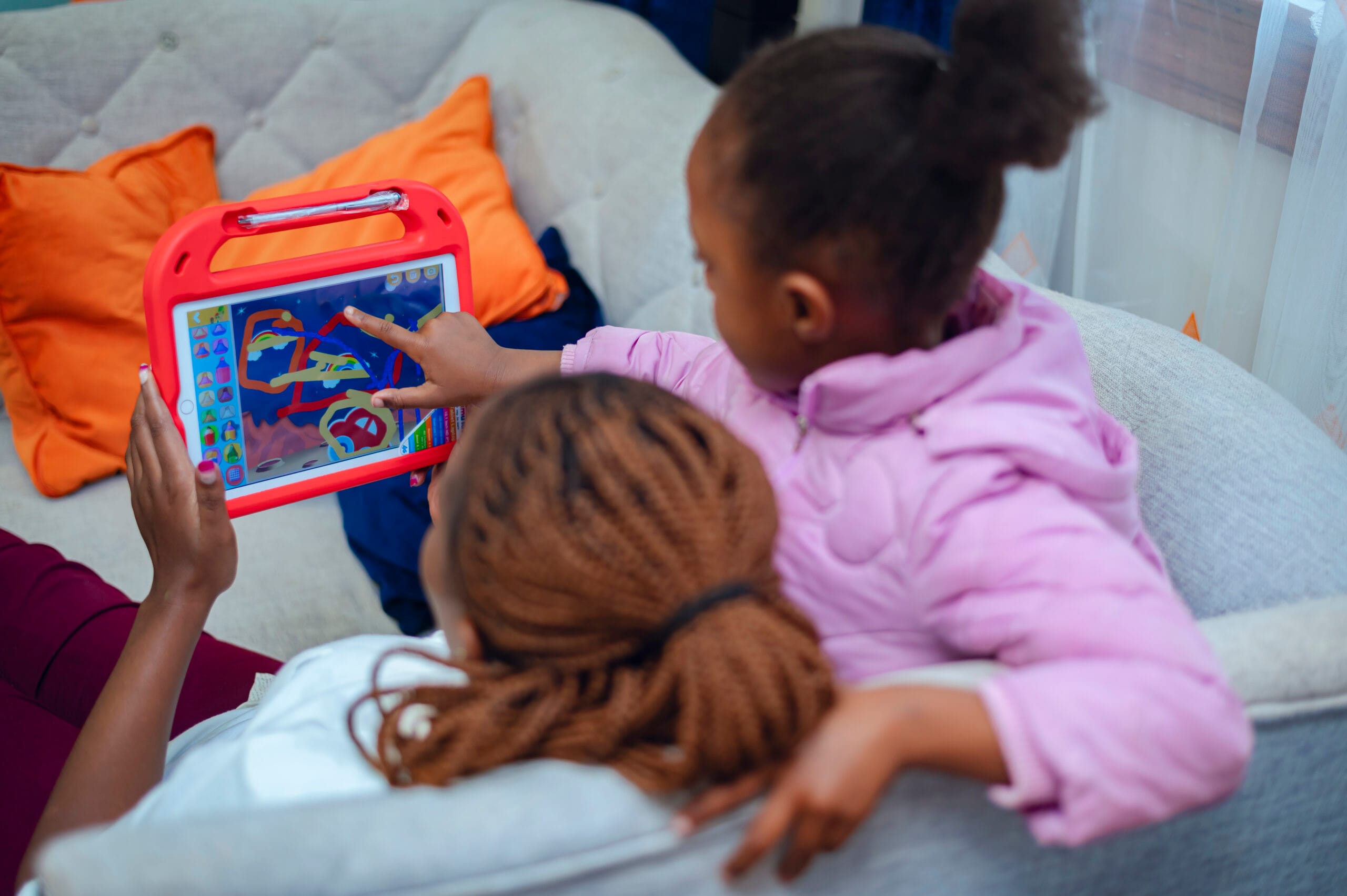
Your child probably knows how to use a phone.
They can swipe.
They can search.
They can open apps.
They can find videos.
They can skip ads faster than you can say, “Give me that phone.”
But here is the thing.
That does not mean they are digitally literate.
It only means they are comfortable with screens.
And there is a big difference.
A child can know how to open YouTube and still not know how to tell whether a video is misleading.
A child can search for homework answers and still not know which source to trust.
A child can use AI to write a paragraph and still not understand what the paragraph means.
A child can download an app and still not know what information they are giving away.
That is why digital literacy matters.
Not as a fancy school term.
As a life skill.
It Is Not Just Reading and Writing Anymore
Reading still matters.
Writing still matters.
No serious learning happens without them.
But children today are not only learning from books and blackboards. They are learning from search engines, videos, apps, digital libraries, online classes, AI tools, and sometimes random strangers on the internet.
That changes the job.
A child today does not only need to read a paragraph.
They need to ask, “Is this true?”
They do not only need to write an answer.
They need to know whether AI helped them understand or just helped them finish.
They do not only need to use a tablet.
They need to know how to use it safely, wisely, and for something useful.
That is digital literacy.
The First Answer Is Not Always the Best Answer
Many children think research means typing something into Google and copying the first thing that appears.
Adults do it too, so we cannot even pretend.
But children need to learn that the internet is not one big textbook.
It is a marketplace of information.
So when a child searches for a school topic, the goal should not be “find an answer quickly.”
The goal should be “find an answer you can trust.”
The internet moves fast.
A video appears.
A message is forwarded.
A headline sounds shocking.
A picture looks real.
An AI answer sounds confident.
And the child believes it.
Or shares it.
Or repeats it.
That is why one of the most important digital habits is the pause.
Before believing, pause.
Before sharing, pause.
Before copying, pause.
Before clicking, pause.
That pause gives the child time to think.
Is this true?
Is this safe?
Is this for my age?
Is this helping me?
Should I ask an adult?
Digital literacy is not only about knowing what to do.
Sometimes it is knowing when to stop.
Watching Is Easy. Creating Takes Something More.
Most children know how to consume content.
That part is easy.
They can watch videos for hours. They can move from one clip to the next without even noticing how much time has passed.
But a learning screen should not only make a child a better watcher.
It should help them become a better creator.
Can they write a short story?
Can they make a simple presentation?
Can they record themselves explaining a topic?
Can they design a poster?
Can they code something small?
Can they use a tablet to practise, revise, draw, read, or build?
That is where screen time becomes more useful.
Because a child who creates is doing more than passing time.
They are thinking.
They are choosing.
They are solving.
They are expressing something.
That is a different kind of digital use.
Privacy Is Not Just for Adults
Children do not always understand that personal information is valuable.
To them, a name is just a name.
A school uniform is just a uniform.
A location is just a location.
A password is just something annoying to remember.
But online, small details can matter.
So children need simple rules.
Do not share passwords.
Do not share your location with strangers.
Do not click every link.
Do not download apps without permission.
Do not send private photos.
Do not give out family information online.
This does not need to be a scary conversation.
It just needs to be a repeated one.
The same way we teach children to look both ways before crossing the road, we also need to teach them to think before sharing online.
Parents Do Not Need to Know Everything
This is where many parents get stuck.
They think, “My child knows more about these devices than I do.”
Maybe.
But your child knowing how to use a device does not mean they know how to use it wisely.
You may not know every app.
You may not understand every AI tool.
You may not know every game or platform.
But you can still ask better questions.
What are you watching?
What did you learn?
Who created that video?
Can you explain that answer in your own words?
Did anything online make you uncomfortable?
Is this schoolwork or entertainment?
Those questions matter.
They remind the child that the screen is not a private world with no guidance.
The Real Goal
The goal is not to make children afraid of technology.
That would be pointless.
Technology is already part of how they learn, communicate, create, and prepare for the future.
The goal is to help them become wise users.
Children should know how to search.
But also how to verify.
They should know how to use AI.
But also how to think for themselves.
They should know how to watch.
But also how to create.
They should know how to go online.
But also how to stay safe.
That is digital literacy.
And it is now as important as many of the life skills we already care about.
Because the child who is digitally literate is not just good with screens.
They are safer, sharper, more creative, and better prepared.
At ElimuTab, we believe children should not only be given access to technology.
They should be guided to use it with purpose.
Because the future will not only ask whether your child can go online.
It will ask whether they know what to do when they get there.