Children today are growing up in a world full of screens.
They watch videos, play games, use tablets, attend online classes, search for information, and now even interact with AI tools. For many parents, this raises a real concern:
Are screens replacing books?
It is a fair question.
For many years, books have been at the heart of learning. They help children build language, imagination, concentration, memory, and confidence. A child who reads often is not just learning words. They are learning how to think, understand, question, and express ideas.
That should not disappear because learning has become more digital.
In fact, good digital learning should not kill reading.
It should make reading easier to access, more engaging, and more consistent.
Books Still Matter
A video can explain a topic quickly.
An app can help a child practise.
A quiz can test understanding.
AI can answer questions.
But books do something different.
Books slow the child down.
They teach patience. They help children follow ideas from beginning to end. They build vocabulary. They improve focus. They invite children to imagine beyond what is shown on a screen.
That kind of learning still matters.
A child who reads builds more than school knowledge. They build attention, curiosity, and language.
And in a world where many children are used to quick videos, fast scrolling, and instant answers, the ability to sit with a book is becoming even more valuable.
Digital Does Not Mean “No Books”
Sometimes parents hear “digital learning” and imagine a child watching videos all day.
But that is not what meaningful digital learning should be.
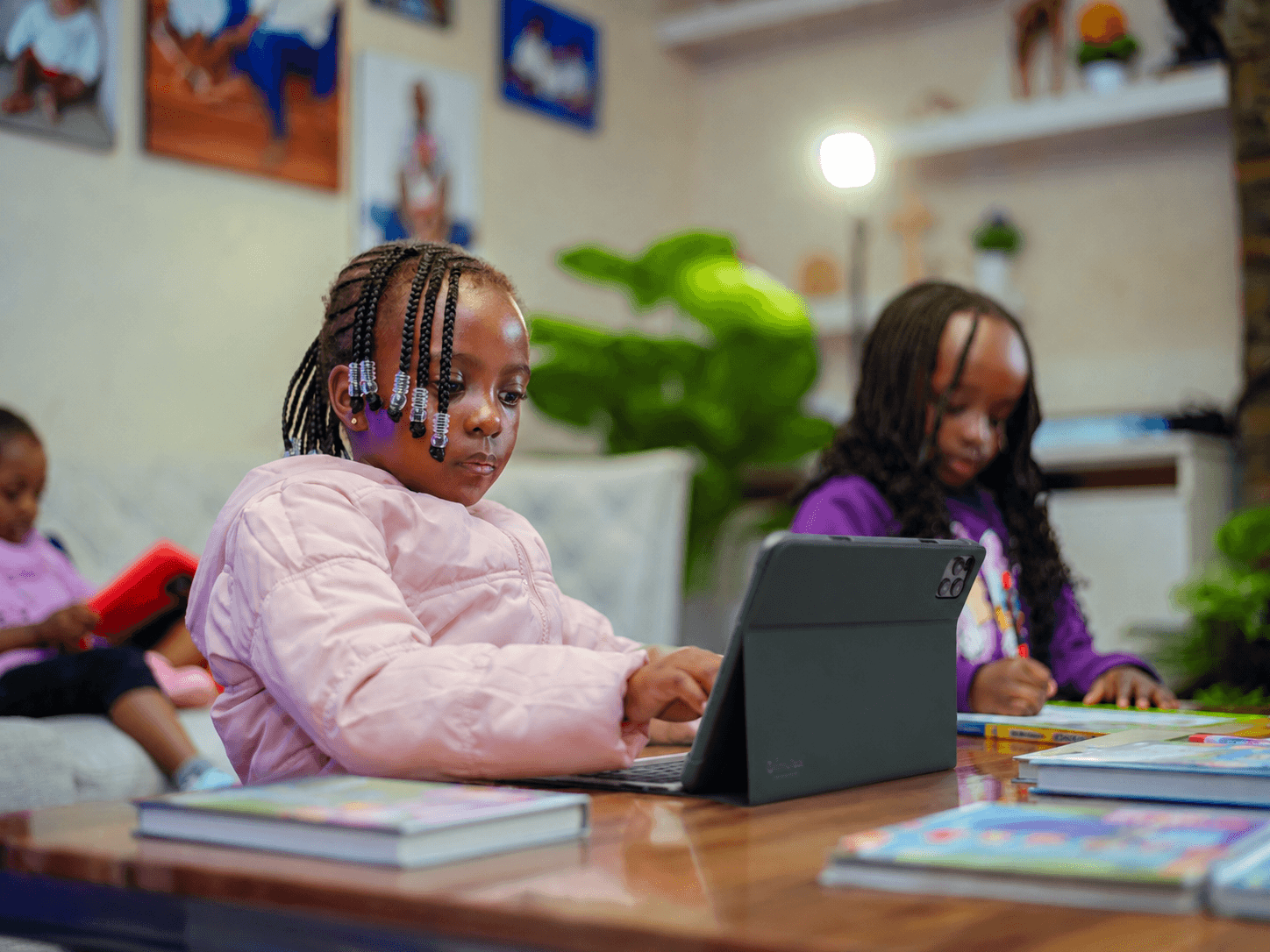
A learning tablet can also be a digital library.
It can carry storybooks, revision books, textbooks, read-aloud content, comprehension passages, and subject notes. It can help a child access books even when physical copies are expensive, unavailable, or easily damaged.
For some families, this is powerful.
One device can hold many books.
One child can access different reading levels.
One parent can guide reading without needing to buy a new book every week.
That is where technology can support reading instead of replacing it.
Reading Can Become More Engaging
Digital books can also help children who struggle with reading.
Some children learn better when they can hear a story read aloud. Others need images, highlighted words, interactive questions, or repeated practice. A digital reading experience can support these different needs.
For younger children, this may mean phonics, sounds, picture books, and read-aloud stories.
For older children, it may mean comprehension exercises, subject notes, novels, summaries, and revision materials.
The goal is not to make reading flashy.
The goal is to make reading more reachable.
Because the more a child reads, the more confident they become.
Parents Still Shape the Reading Habit
A tablet can provide books.
But it cannot build the reading habit alone.
That still needs a parent.
A simple routine can make a big difference:
Read one story before bedtime.
Spend 20 minutes on reading before videos.
Ask your child to explain what they read.
Let older children summarise a chapter.
Create quiet reading time at home.
Celebrate finishing a book, not just passing a quiz.
These small habits help children see reading as part of everyday life.
And parents do not need to make it complicated. One question is enough to start:
“What did you read today?”
That question tells the child that reading matters.
Books and Screens Can Work Together
The future of learning does not have to be books versus screens.
It can be books with screens.
A child can read a story on a tablet, then write a short summary.
A child can watch a science video, then read more about the topic.
A child can use an app to learn new vocabulary, then apply those words in writing.
A child can read a digital book, then discuss the lesson with a parent.
That is balanced learning.
The screen introduces.
The book deepens.
The parent connects everything.